

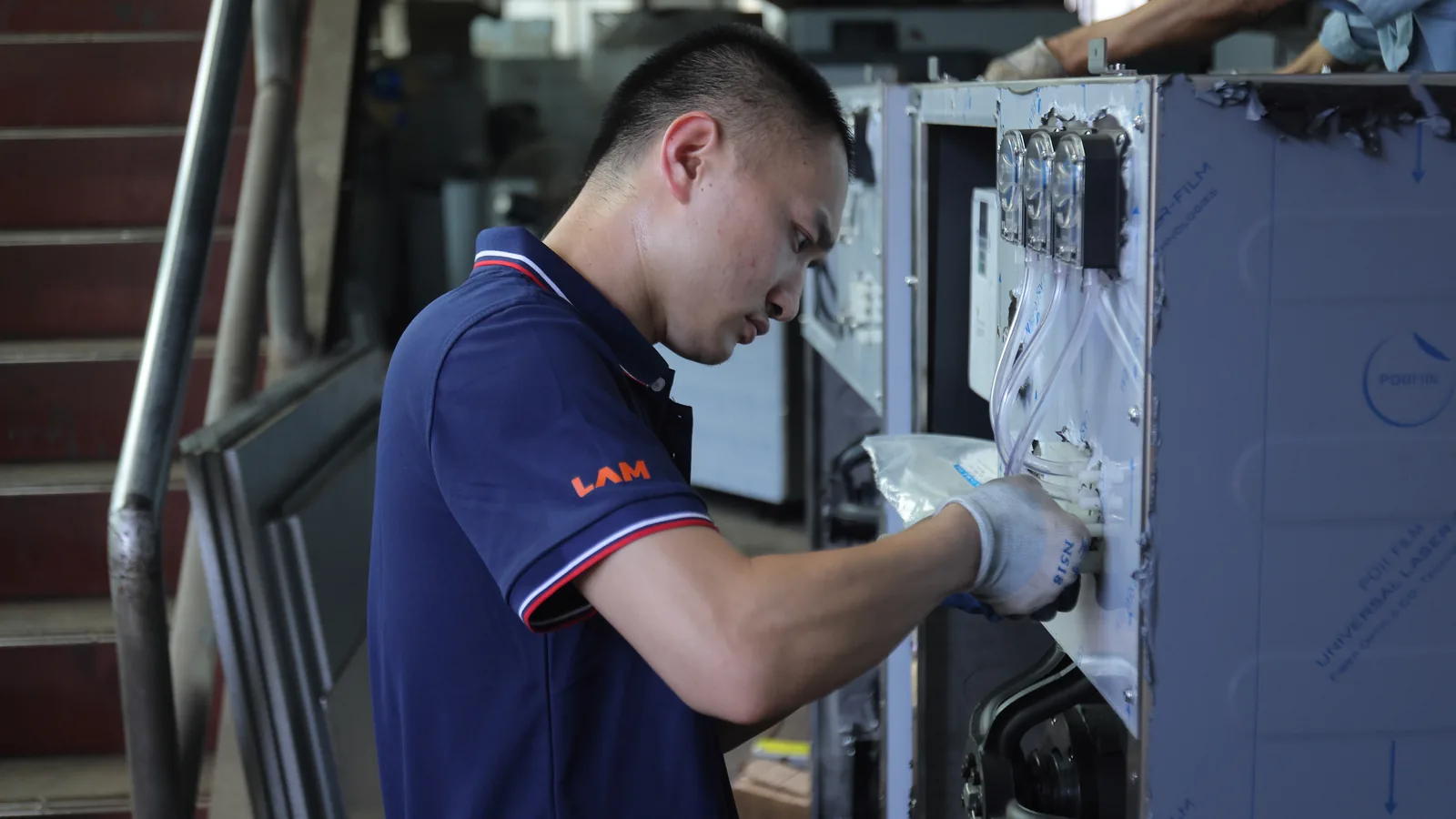
The final appearance hides a carefully routed interior
Behind the stainless-steel cabinet of a commercial washer or dryer are electrical circuits, control devices, hoses, valves, drive components and service connections. Final assembly is where these systems are brought together, checked for clear routing and prepared for operation.
Good assembly work is visible in practical details: wires and hoses follow understandable paths, moving parts retain clearance, connection points remain accessible and components are supported rather than left under unnecessary tension.
1. Routing electrical wiring and control connections
Technicians connect the operator controls, sensors, actuators, motors and protective devices according to the machine configuration. The routing must account for heat, moisture, vibration, sharp edges and future service access.
Connections are checked as the work progresses. Keeping the cabinet open at this stage makes it easier to trace a circuit, confirm a connector and correct the route before panels limit access.
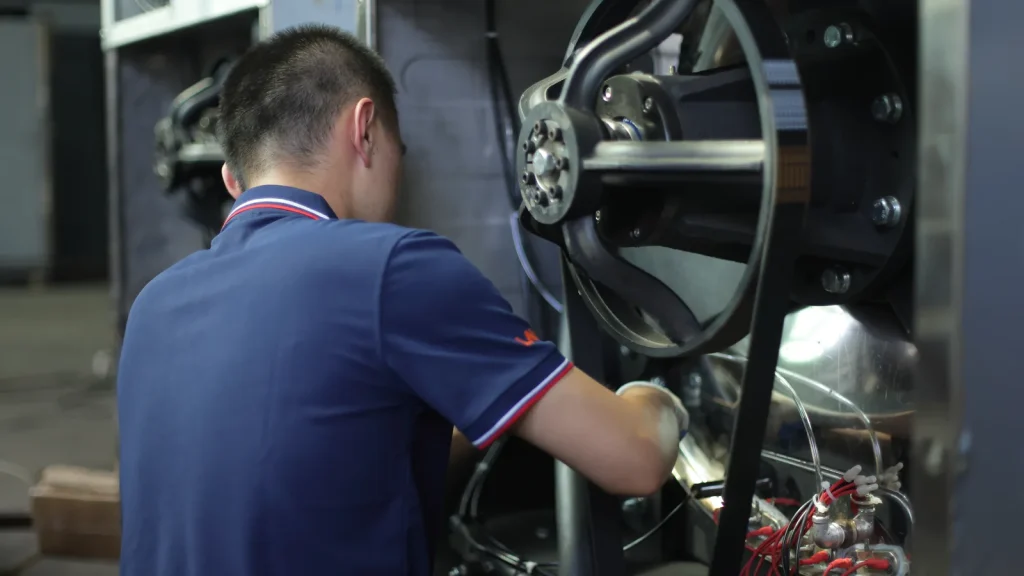
2. Coordinating water and process lines
Water inlets, drain paths and dosing connections must be arranged around the mechanical and electrical systems. The objective is a clear installation that avoids tight bends, interference with moving parts and unnecessary strain at fittings.
The exact arrangement varies by machine and project, so the final site utilities should always be checked against the current technical drawing before installation.
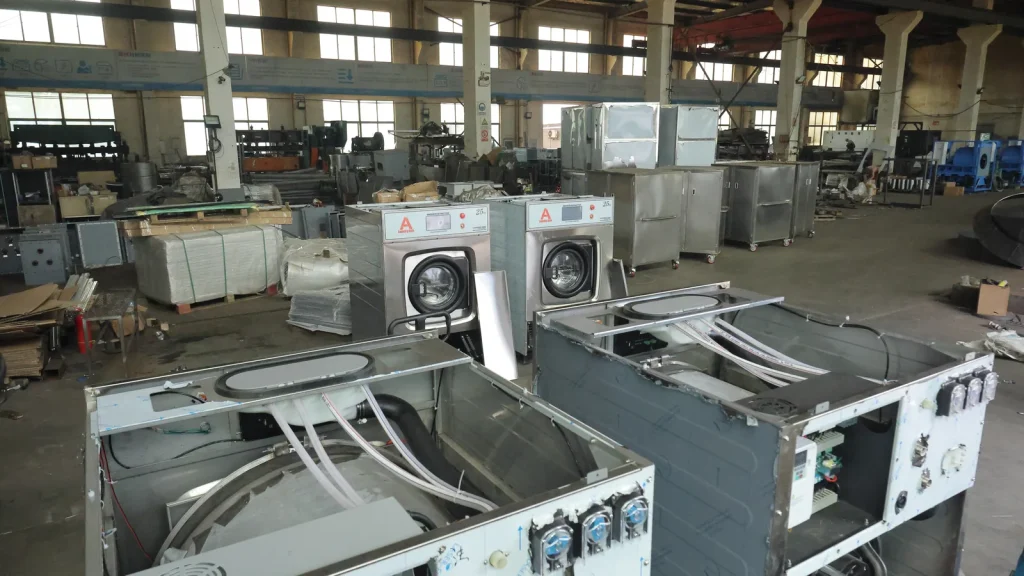
3. Inspecting the drive and mechanical areas
Drive components are reviewed for their position, clearance and connection to the drum assembly. Technicians also look for anything that could rub, loosen or obstruct service access. These checks are easier while the rear or side panels remain open.
4. Preparing for functional checks
After assembly, the machine moves through the checks appropriate to its configuration. The team reviews control response, safety devices, water paths, drainage, rotation and other observable functions before exterior protection and packing are completed.
Factory checks do not replace site commissioning. Voltage, water pressure, drainage, ventilation, anchoring and local installation conditions still need to be verified at the destination.
5. Protecting the machine for delivery
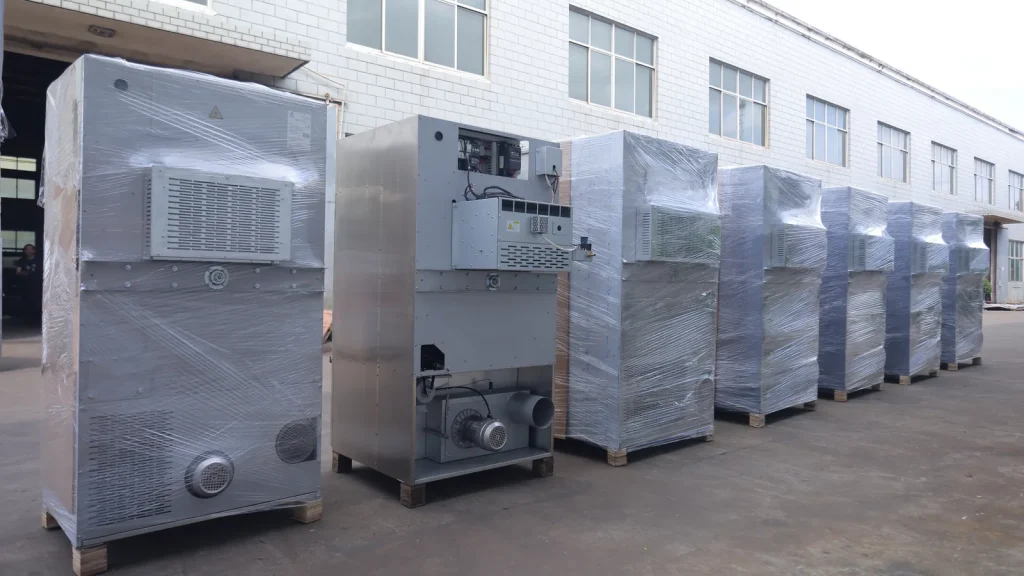
Once the equipment is ready for dispatch, protective wrapping helps keep finished surfaces and exposed areas clean during handling. Documentation, accessories and project-specific items should be matched with the shipment before it leaves the factory.
A useful pre-delivery discussion should confirm
- Exact model, capacity and heating configuration
- Site voltage, frequency and available electrical capacity
- Water, drain, gas or steam connections where applicable
- Doorways, lifting route and final equipment position
- Foundation or anchoring requirements
- Ventilation, exhaust and maintenance clearances
- Required manuals, packing marks and destination documents
Sharing these details before shipment gives the factory and installation teams a clearer basis for coordination—and helps the equipment arrive better prepared for commissioning.


