
Choose the heating source from the whole site—not the dryer alone
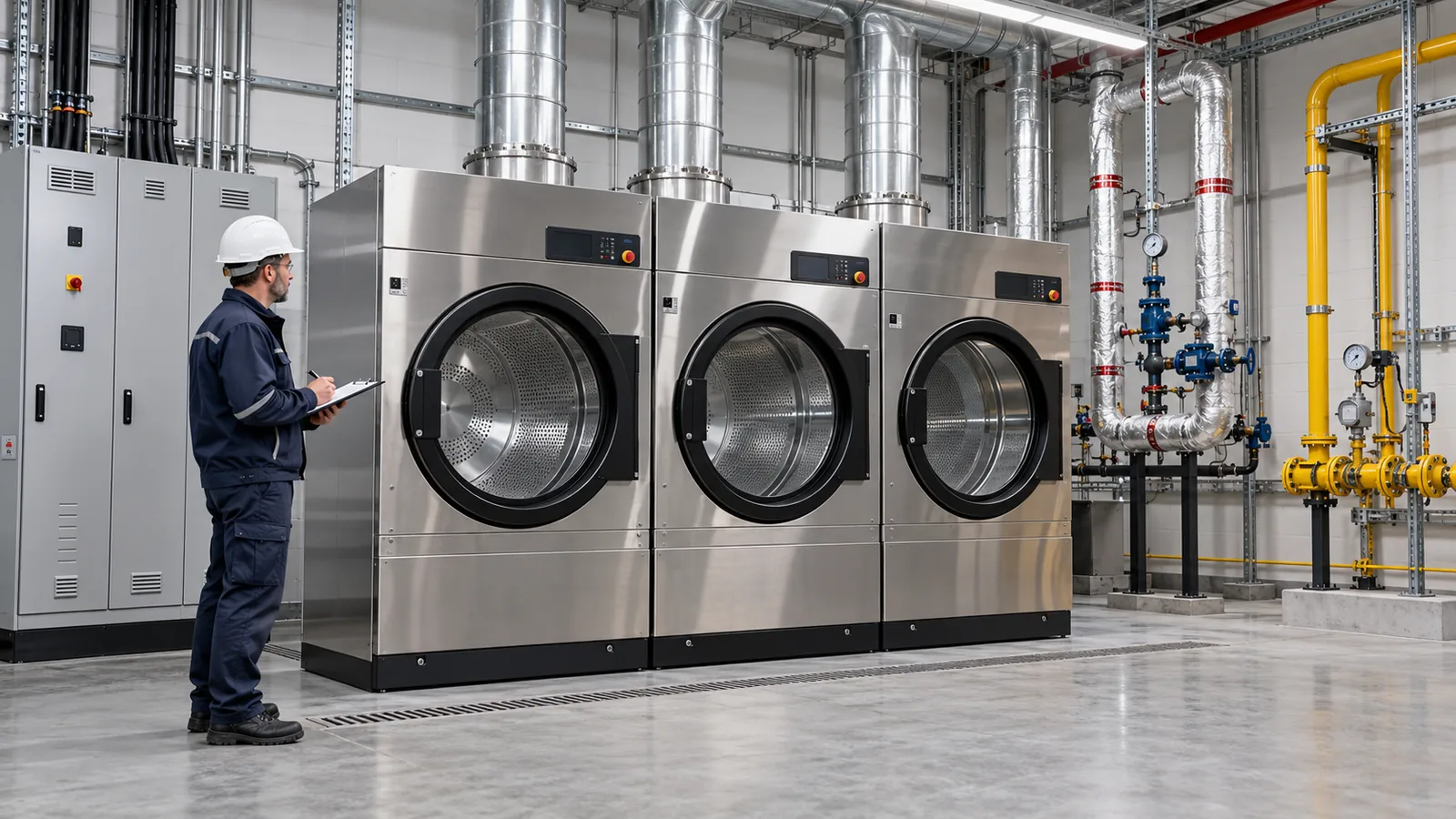
Commercial tumble dryers may be configured for electric, gas or steam heat, depending on the model and market. The best option is the one that fits the available utilities, required throughput, local energy cost, ventilation design, maintenance capability and approval process. A heating source should never be selected from purchase price alone.
Electric heating
Electric heat can simplify projects where adequate electrical capacity is available and combustion systems are undesirable. The project must confirm voltage, phase, frequency, connected load, protective devices and the effect of demand charges. Large electric loads may require substantial upgrades to transformers, distribution boards and cabling.
Gas heating
Gas heat can provide strong heating performance where a suitable gas supply and local approval are available. The design must address gas type and pressure, combustion air, exhaust, safety shutoff, detection requirements and qualified service support. Requirements vary significantly by country and jurisdiction.
Steam heating
Steam may be practical for facilities that already operate a stable central boiler system. Confirm steam pressure and quality at the dryer, condensate return, valve sizing, warm-up behavior and the true cost of generating and distributing steam. A distant or undersized steam system can reduce expected performance.
Side-by-side project questions
| Factor | Electric | Gas | Steam |
|---|---|---|---|
| Primary site input | Electrical capacity and tariff | Gas type, pressure and approvals | Steam pressure, quality and boiler capacity |
| Supporting systems | Distribution and protection | Combustion air and gas safety | Valves, traps and condensate return |
| Maintenance focus | Elements, contactors and electrical load | Burner, ignition and combustion system | Coils, traps, valves and steam quality |
| Best evaluated with | Electrical engineer and utility data | Gas specialist and local authority | Boiler/steam engineer and plant data |
Airflow is part of the heating decision
Heat can only dry textiles efficiently when the airflow system is correctly designed. Check exhaust duct diameter, equivalent length, elbows, back pressure, make-up air, lint management and discharge location. Poor airflow can lengthen cycles, increase energy use and create unsafe operating conditions regardless of the heating source.

Information to provide before quotation
- Required batch size and textile type
- Target loads per hour and operating schedule
- Voltage, phase, frequency and available electrical capacity
- Gas type and pressure, or steam pressure and boiler capacity
- Proposed exhaust route and available make-up air
- Local certification, combustion and environmental requirements
- Energy prices and available maintenance skills
Frequently asked questions
Which heating source is always the cheapest to operate?
There is no universal answer. Tariffs, boiler efficiency, gas availability, demand charges, climate, airflow and utilization all affect lifecycle cost.
Can the heating source be changed later?
Conversion may be impractical or unsupported. Confirm the exact model configuration before ordering and treat any future conversion as a new engineering review.


